


The 5S Method – The Foundations of Organization
What is the 5S system? The 5S method, part of the broader Lean management system, originated in Japan and is used to streamline work organization and increase efficiency. Its roots date back to the 1950s, when Japanese enterprises began implementing systems aimed at eliminating waste and optimizing processes.
-
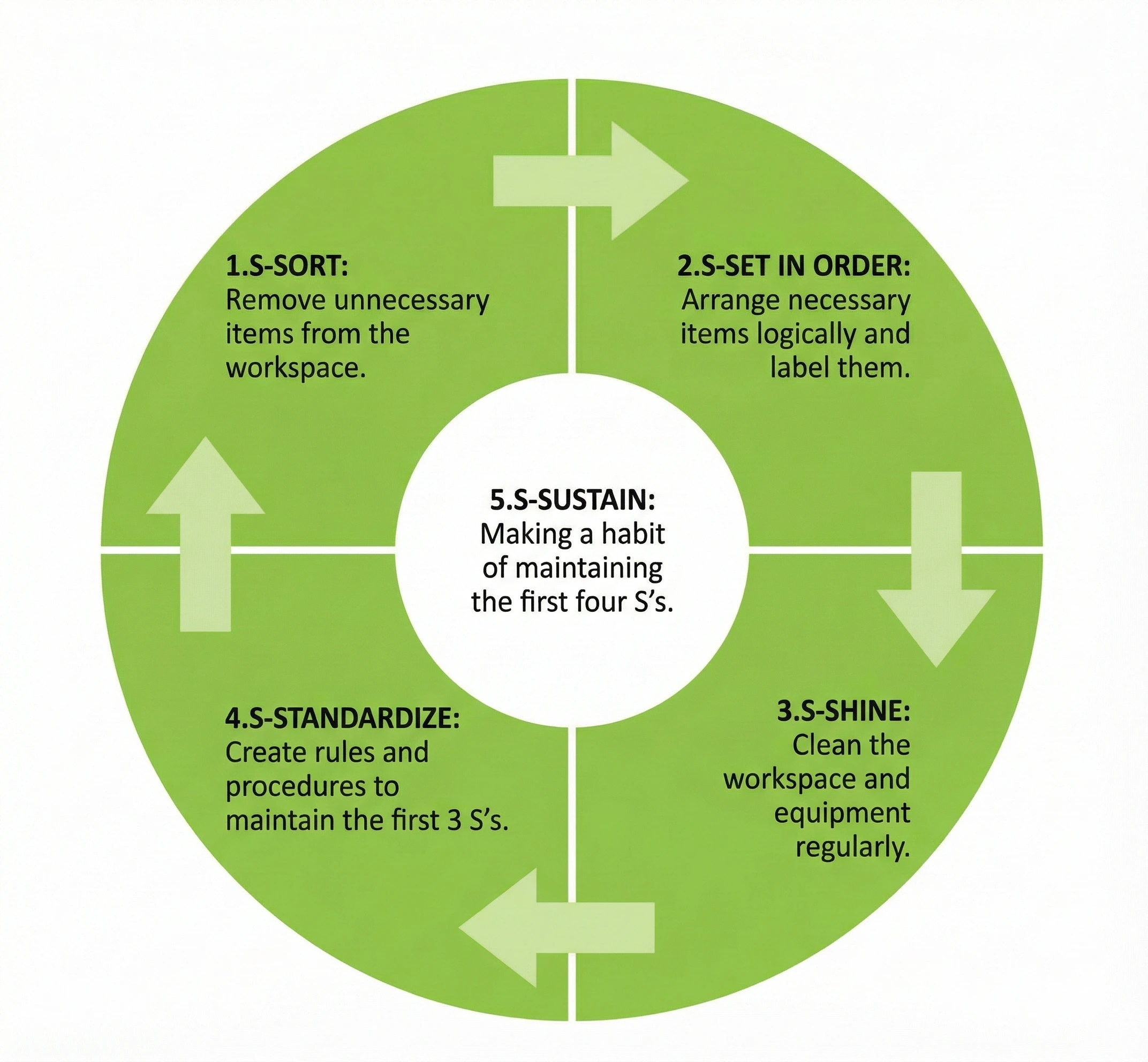
Seiri (Sort) - The first step of the 5S method involves sorting and separating unnecessary items from those that are actually needed for work. The goal is to create a clear and organized workspace.
-
Seiton (Set in Order) - In the second step, all necessary items are systematically arranged so that they are easily accessible. A shadow board is a perfect example of a tool used in this stage, helping to visualize and organize tools.
-
Seiso (Shine) - The third step involves regular cleaning of the workspace and maintaining cleanliness. Maintaining order is key to long-term efficiency and safety.
-
Seiketsu (Standardize) - Standardization involves establishing rules and standards to ensure that the previous three steps are regularly followed. Documenting procedures and using visualizations, such as shadow boards, help in maintaining standards.
-
Shitsuke (Sustain) - The final step of the 5S method is self-discipline and maintaining the implemented rules. This requires regular monitoring and improvement of practices, which can be supported by visual tools like shadow boards.
The Shadow Board: A Key Tool for Organization
-
What is a shadow board? A shadow board is a visual tool used for the effective organization of tools and materials in the workplace. It is a system where every tool has its assigned place, making it easier to quickly find and return items.
-
How does a shadow board support the 5S method? The shadow board fits perfectly into the Seiton (Set in Order) stage of the 5S method, ensuring that all tools are systematically organized and easily accessible. This helps to maintain order and increases work efficiency.
-
Benefits of using a shadow board:
-
Increased efficiency - faster retrieval of tools and materials.
-
Easier maintenance of order - visual marking of storage spots.
-
Waste reduction - less time spent searching for items.
-
Implementing a Shadow Board in Your Company
-
Planning - Start by analyzing the tools and materials that will be stored on the shadow board. Identify which items are used most frequently and plan their layout.
-
Choosing the Board - Select the appropriate shadow board model that meets your needs. You can choose from various types, such as wall boards, boards with hooks, or magnetic ones.
-
Training - Train employees on how to use the shadow board and maintain order. Regular reminders and training sessions will help maintain standards.
-
Monitoring and Maintenance - Regularly check the condition of the shadow board and make improvements as needed. Gather feedback from the team and adjust the system to ensure its effectiveness.
Examples of Shadow Board Applications
-
In workshops - for organizing hand tools such as hammers, screwdrivers, and wrenches.
-
In warehouses - for monitoring inventory levels and managing product locations.
-
In offices - for organizing office supplies and equipment such as pens, staplers, and notebooks.
Summary
The 5S method and shadow boards are powerful tools in workspace management. Thanks to its history and application, the 5S method helps create an organized and efficient workplace, while the shadow board supports this process by providing visual organization for tools and materials. Implementing both of these methods can bring tangible benefits in terms of organization, efficiency, and safety in the workplace.
Do you have questions about the 5S method or shadow boards? Contact us at LeanFoam for more information and support in implementing these tools!
 Log in with Facebook
 Log in with Google