


The 5S system in Lean Management - from Toyota to Your workshop
Are you looking for a way to achieve perfect order in your company? The answer is the 5S System – a key tool of the Lean Management methodology that has been helping to eliminate waste and increase efficiency for decades. But how did a Japanese philosophy from the 1950s become a standard in modern workshops worldwide?
Discover the history of 5S evolution and find out why modern tools, such as shadow boards, are its ultimate culmination.
Origins: it all started at Toyota
The foundations of Lean Management were laid within the Toyota Production System (TPS). In the 1950s and 60s, Taiichi Ohno and his team developed a system aimed at the absolute elimination of waste (Muda). It was then realized that clutter and a lack of standards are the main enemies of productivity.
What is 5S? The 5 Pillars of Order
5S is not just about cleaning - it is a habit and a discipline. The name comes from five Japanese words that form a cycle of continuous improvement:
-
Seiri (Sort) - separating what is essential from unnecessary items cluttering the space.
-
Seiton (Set in order) - designating a place for every item. This is where the concept "a place for everything and everything in its place" is born.
-
Seiso (Shine) - regular cleaning that allows for the detection of defects and anomalies.
-
Seiketsu (Standardize) - establishing clear rules so that order becomes the norm, not the exception.
-
Shitsuke (Sustain) - building habits so that maintaining 5S rules becomes second nature to every employee.
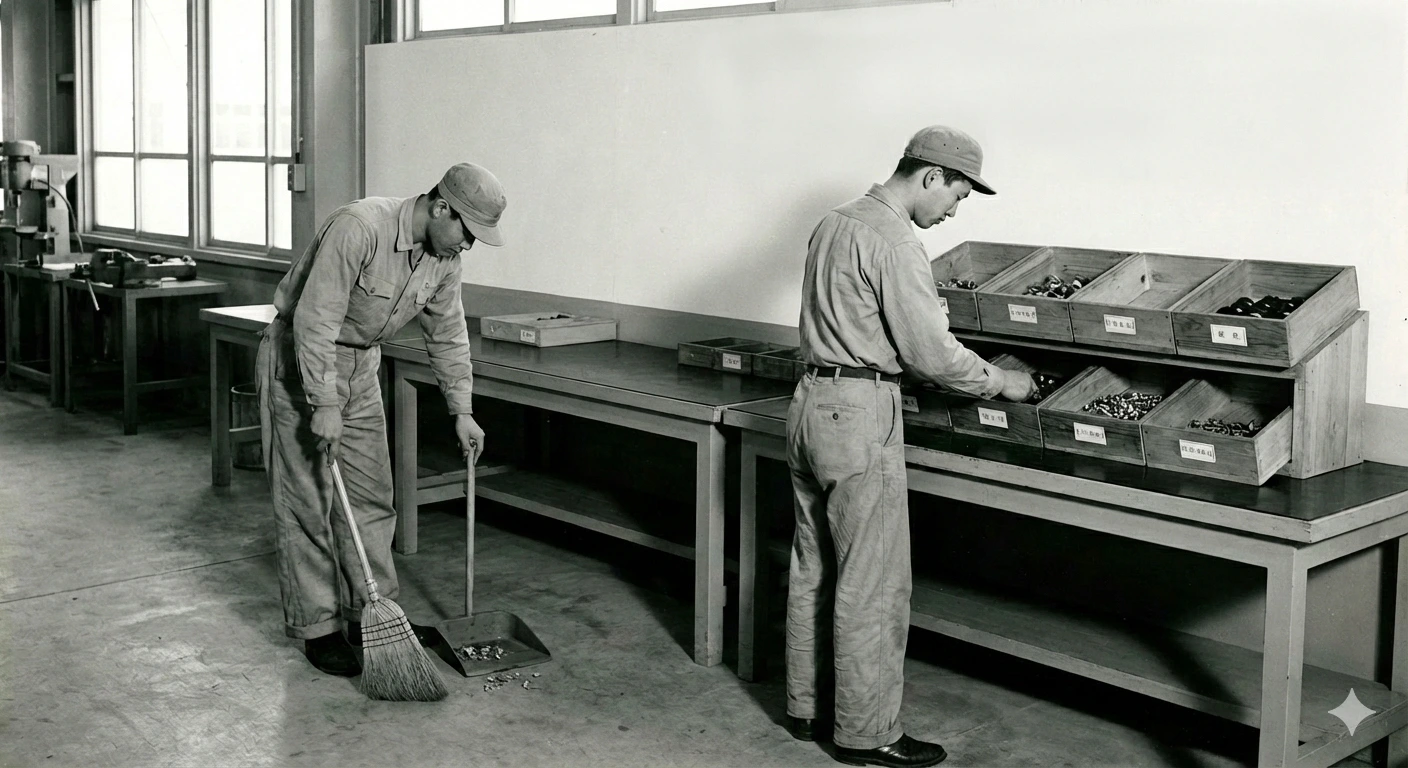
The evolution of the 5S method - A brief history
1950s and 60s - birth in Japan
Initially, 5S was an internal tool at Toyota. The focus was on the physical aspect of production. Thanks to this, Japanese factories began to drastically outperform the competition in terms of quality and speed, proving that a clean workstation is an efficient workstation.
1980s - expansion to the West
The world became fascinated by Japanese quality. Experts like W. Edwards Deming and Joseph Juran began promoting these solutions in the USA and Europe. The 5S system ceased to be a "Japanese curiosity" and became a global standard for implementing Lean Management – from car factories to small production plants.
21st Century - time for modern tools (shadow boards)
Today, 5S theory meets modern material technology. In the 21st century, we no longer need to paint tool outlines on a wooden board. The contemporary approach to the Seiton (Set in Order) and Seiketsu (Standardize) stages relies on professional visual solutions, such as shadow boards made of technical foam.
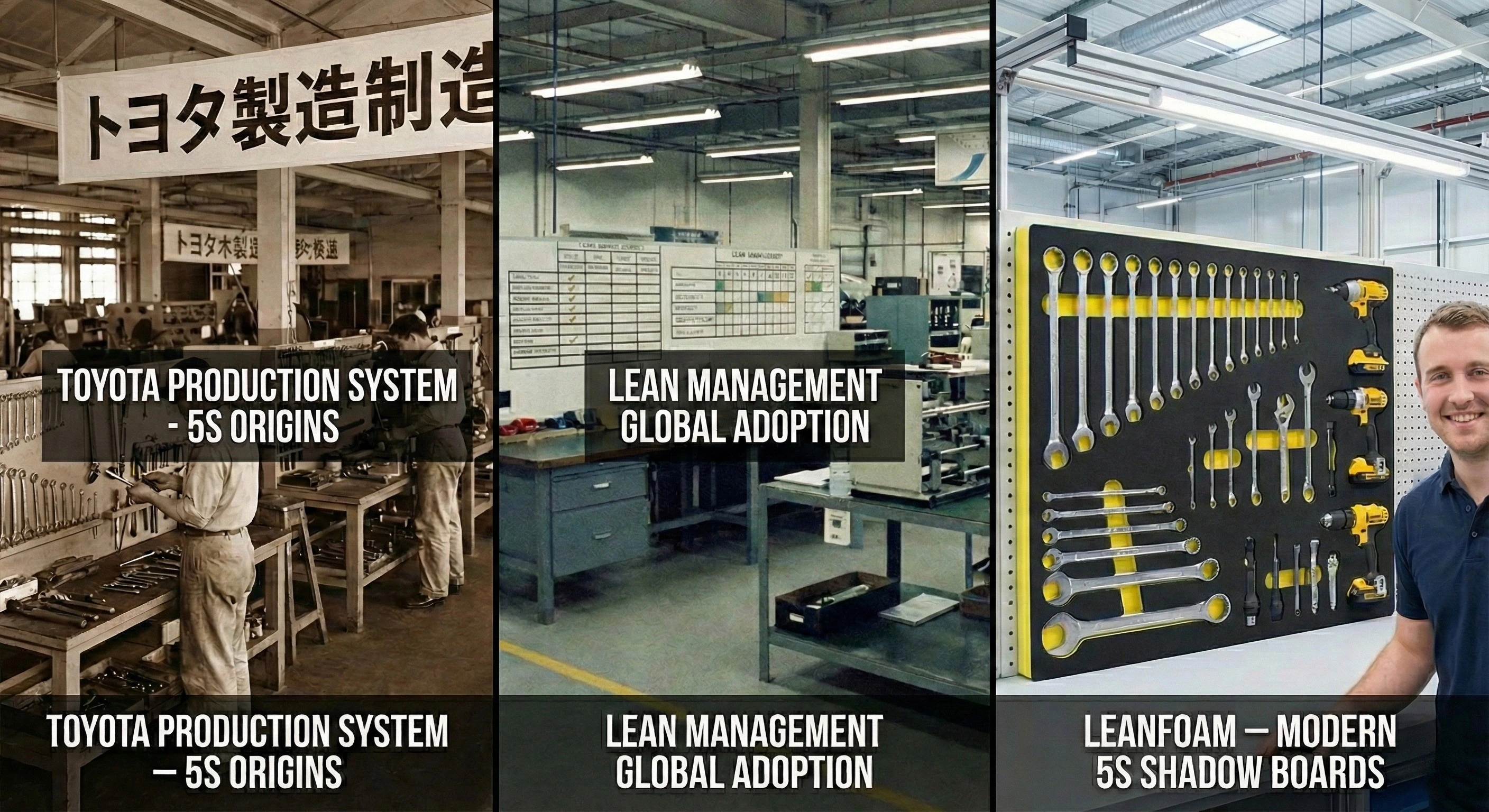
Why is this a natural step in the evolution of 5S?
-
Visualization: missing tools are immediately visible (due to the contrasting foam color).
-
Protection: foam, unlike old methods, protects equipment from damage.
-
Speed: access to tools is instantaneous.
The 5S system has come a long way - from simple housekeeping rules in the Toyota factory to advanced foam systems that you can implement in your workshop thanks to LeanFoam.
Want to bring a success story to your company? Check out our shadow board foams and start implementing 5S today!
 Log in with Facebook
 Log in with Google